Why Banning Drones for Individuals Is a Dead End
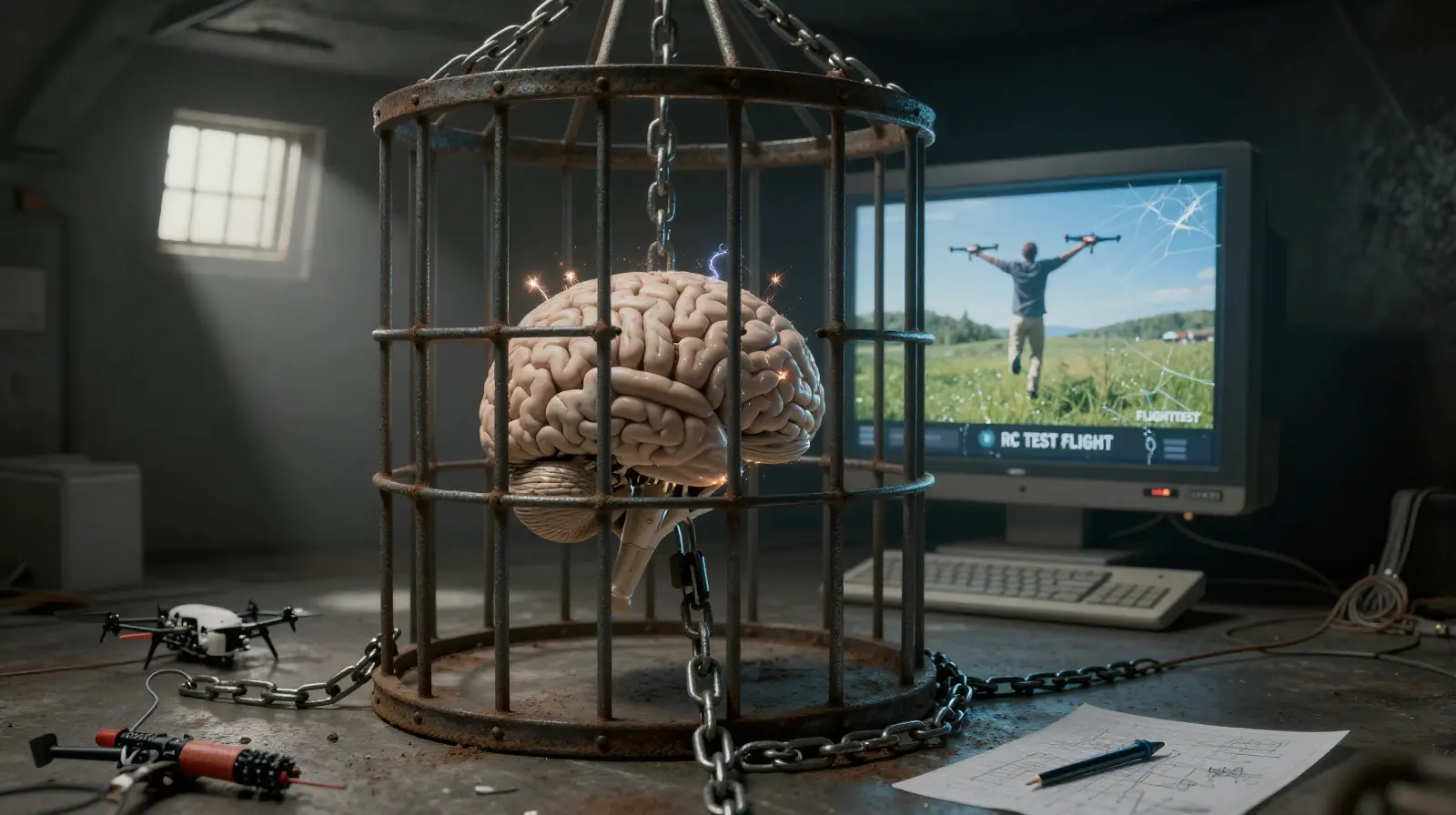
A paradoxical situation has developed in the Republic of Belarus: unmanned aerial vehicles (UAVs) are effectively banned for individuals, and their development and testing are criminalized or relegated to a "gray" zone. We, engineers, designers, and amateur pilots, are not calling for chaos. We recognize the need for oversight and safety. But a total ban is not a solution. It's a trap that weakens the country—economically, technologically, and defensively.
1. The ban doesn't work against saboteurs—it works against law-abiding citizens.
Extremists and saboteurs don't care about bans one way or another. They'll assemble an FPV drone from Chinese components, lift it, and cause damage.
The ban only stops those who are willing to act legally: an engineer who wants to test a new stabilization system; a robotics teacher who can't take his students to the school stadium; a responsible adult who enjoys legally flying and building things in his free time.
By prohibiting creative freedom, we lose our allies in them. At the same time, the real threat remains.
2. Military training won't develop skills.
Developing any skill requires regular repetition and practice. Defense doctrine often relies on training: "In the event of a threat, we'll call up the reservists, train them, and provide drones."
Drone control is a complex psychomotor skill. At a training camp, you can learn the basics and even teach a few things over the course of 1-2 months. But after a month without practice, 80% of the skills disappear. And war doesn't ask when it's convenient for you to remember.
A clear example can be found online – an incident involving a soldier during a drone demonstration at an educational institution, where the device simply crashed into the ceiling at high speed and died. And there's no point in hiding it, as we like to do. Instead, we need to assess the problem and seek a solution.
If 10,000 drone operators were needed tomorrow, they wouldn't be available. The army won't train them at training camps. The country will have to train them under fire. To say nothing of those skilled in design, 3D modeling, milling, assembly, and innovative solutions – finding and training them is even more difficult.
The decisive factor on the battlefield today isn't a titled general, or an expensive tank or UAV, which would cost as much as building a school or kindergarten. And the developments of the ArduPilot, BetaFlight, iNav, and other communities—thousands of engineers and programmers around the world who wrote code out of sheer enthusiasm, without government contracts.
It was this open ecosystem, not secret design bureaus, that defined the modern face of the unmanned industry. It was from this "garage" culture that grew what determines the course of wars today and shapes the multi-billion dollar market for unmanned technologies. This is how technologies are born that change the economy and the face of war. And what about us? While the world is creating a new economy and introducing artificial intelligence to control drone swarms, we stifle initiative with restrictions.
We remember the consequences of the illusion of "we'll have time to prepare tomorrow." June 22, 1941—the direct price of that.
3. An engineer doesn't need to prove they're an engineer; they need to be given the right to try.
In the Republic of Belarus, an adult cannot legally buy a flight controller, propellers, or motors, assemble an experimental drone, take it out into a field, lift it, and test it. Crash, fix it, take off again.
No brilliant inventor ever asked a government official for permission. Newton didn't get a license for a falling apple. Tesla didn't prove to a commission that alternating current worked. They just did it, made mistakes, and did it again. Engineering is a state of mind, not a diploma.
We're not asking for money. We're asking for permission for things that don't cause harm. Give people a platform where they can legally test their prototypes. No permits—just notification. And then real startups will start emerging from garages and dorms. Jobs and new solutions will spring up like mushrooms after rain.
4. Permits shouldn't be elitist.
If a license is expensive, only those with money will be able to obtain it, but not always those with the motivation and skills. A talented techie from the provinces who builds drones on their own will remain illegal. Because a license is an unaffordable luxury for them.
Responsibility doesn't correlate with price. The license should be publicly available—1–2 base values. Control—not through wallets, but through exams, registration, and real liability for violations. Elitism in technology is a path to backwardness and defeat.
5. About the situation in other countries
For some reason, the rest of the world has different rules—people with brains and hands can calmly test their prototypes and have no desire to harm anyone. Look at Youtube channels: rctestflight, FlightTest, ProjectAir, Tom Stanton.
In fact, thousands of people in the US, UK, Australia, Asia, Africa, and South America can legally assemble, modify, and test their own model aircraft and drones. They go out into the field, lift a prototype, it crashes—they fix it, and lift it back up. No problems or extremism.
The governments of these countries trust their citizens. Why are we worse than others?
6. Economy
The ban is killing independent engineering schools, the startup culture, and the country's development. Unmanned technologies aren't just about war. They're also about economics and social maturity. Monitoring, precision farming, power line inspection—these are all markets with significant funding and investment. But these markets will be occupied by countries whose laws allow their current inventors to develop: to fly, test, and create new unmanned solutions. By banning flights for individuals, we're cutting ourselves out of this global chain.
Our startups don't emerge because it's impossible to complete the cycle of "idea → prototype → testing → debugging → final product" without going through the bureaucratic hell of registering an organization and obtaining certification for new products.
As a result, we are left without new jobs, without technology exports, without a modern engineering school. But we have everything: heads, hands, traditions. There's no such thing as a "permitted sky" for experimentation.
7. Hunters with guns: a working trust model already exists
There are hundreds of thousands of law-abiding hunters in the country and around the world. They own rifles. They keep them at home. And yet—no one fears them. No one is demanding a ban on hunting.
A gun kills just as effectively as any FPV drone. But the government trusts hunters because there's a clear registration system, an understanding of responsibility, and a culture. Why should it be any different with drones?
If the government trusts people with guns, why shouldn't it trust them with a plastic drone with a motor? The system for drones could be the same—registration, inspection, rules of use, and liability for violations. Without a total ban. Without elitism.
8. "If you want to fly, go to our factories and design bureaus": why it doesn't work for everyone
The Republic of Belarus already has several organizations working on unmanned technologies. And it's natural to hear from officials: "If you're so interested in drones, go work for our companies. We've already done everything for you." At first glance, this seems logical. But this advice is nothing more than a trap and manipulation for newcomers.

First: the author of this article has already walked this path and knows firsthand how everything is organized and the role of the average employee.
Second: in a large enterprise, an employee is simply a small cog, performing a very specific task. Opposite him, in his garage, is an inventor from A to Z. And this is the most important point.
Third: Even the availability of jobs doesn't equate to a desire to work for a specific organization. Everyone has the right to their own path. Not everyone is willing to work and waste their lives pursuing someone else's agenda and glorifying someone else's name. There are also those who create their own and only in it do they show true interest and enthusiasm.
We are not calling for a boycott of existing enterprises. We are simply saying that not everyone may be interested in them and not everyone can get in. We are ready to act independently and openly, legally and responsibly. Without a total ban.
9. A total ban is a sword in the hands of the enemy against ourselves.
By banning our citizens from owning and testing drones, we are not protecting ourselves. We disarm ourselves in the face of those who do not comply with the bans.

Opponents will train operators, test new designs, and develop skills. And our citizens will be afraid to go out into the field with a quadcopter because it's illegal. And if the hour X comes, our opponents will have thousands of ready and trained pilots, hundreds of designers, while we will have prohibitive documents.
By ignoring the military component, the current ban is effectively pushing us towards dependence: tomorrow, we'll be buying products from foreign competitors that they'll manage to create today, while we could be developing our own technology and establishing local organizations for a full production cycle at home.
A total ban isn't a shield. It's a sword we give to our opponents, tying our own hands.
10. Philosophy of the Question
The proposed path is not intended to turn the country into a militaristic enclave. On the contrary, we must be a solid and intellectually developed nation, and therefore respected. Hospitable, friendly, and interesting not only for its attractive girls and casinos, but also for its unique independent engineering and testing school. At the same time, capable of turning into a heavily armed porcupine at any moment if the existence of its people is threatened.
We cannot rely solely on the General Staff and large enterprises today—the enemy's current technologies can disarm the country and destroy its infrastructure within months.
There is an alternative: trust our own people, develop an engineering culture, and provide legal opportunities to invent, build, and fly. Simplify product testing and certification procedures so that new companies can more quickly begin to recoup their development costs. Don't expect startups to come up with lightning-fast, perfect solutions, because everything takes time and resources. Accommodate not only established companies that monopolize markets and take over government contracts, but also new ventures.
11. Control and Development, Not Prohibition
We are not against control. We are for reasonable control, which creates the foundation for a new engineering economy.
1. Introduce a publicly available license for UAV testers and operators.
2. Designate legal testing sites—with the right to notify.
3. Create economic incentives for private engineering: exemption from taxes and bureaucratic complications that distract from real goals during the development period and transformation of a startup into a profitable enterprise.
4. Recognize the importance of engineering culture: grant individual pilots and designers the status of full-fledged players in the country's economy.
5. Introduce a culture of encouraging invention: state awards, open test days, media coverage.
In conclusion:
We believe that the majority of citizens are bearers of common sense. This was proven by the previous 10 years of unimpeded drone use in our country before the ban was introduced. Yes, there were a few incidents, but why ban everyone because of a few idiots.

Adult citizens are capable of responsibility. This has been proven by millions of gun-wielding hunters.
Communities are capable of creating new technologies without government contracts. This has been proven by the ArduPilot and BetaFlight communities. This is proven by thousands of inventors and pilots around the world.
Trust and reasonable oversight are what create a strong economy and a strong country. Fear and total bans are what lead to disasters and technological backwardness.
We have both young and mature, responsible people. They have the skills, the brains, and the desire to act openly. Give them clear rules, an accessible license, a testing platform, and the freedom to create. And then the country will have thousands of pilots, hundreds of engineers, and dozens of new enterprises—ready to contribute productively to the economy and to protect the country at a critical moment.
Control must remain. But a total ban is a dead end—military, economic, and social.
This material represents an expert opinion and contains proposals for improving legislation regarding UAV circulation for individuals in the interests of developing the country's engineering school, economy, and defense capability.
Автор статьи