How to Overcome Apathy After 30
Be honest. How many times in the last month have you stared at the screen and felt absolutely nothing inside?
Not tiredness. Not burnout. Just emptiness. The feeling that you're working, committing, solving problems, but days just fly by, leaving a sense of gray matter smeared across your keyboard.
We know this feeling. We're developers too. And we know what your colleagues aren't saying: when work stops being creative and turns into an endless stream of Jira tickets, code stops being enjoyable. And when code stops being enjoyable, everything stops being enjoyable.
The "Infinite Scroll" Effect in Development
Let's be honest: working with data, frontend, or backend is essentially an infinite scroll. The same patterns, the same bugs, the same deploys. You're a talented engineer. You can solve complex problems. But your work has stopped giving you that "click" of satisfaction — the very reason you got into IT in the first place.
And that's not even the worst part. The worst part is that this state starts seeping into your life.
You come home. You're tired. You don't want to talk. You don't want to explain anything. You just shut yourself in your room with your phone. And your kids or your partner look at you and don't understand why you've become like this. You don't understand why you've become like this either.
This isn't depression. This is losing touch with yourself.

And you know what? There's a name for this. It's when your brain — which was built for creativity and solving interesting problems — is forced to do routine work. And it takes revenge on you with apathy. It takes revenge with indifference to what used to bring joy.
We went through this. And we found one solution that worked. No, it's not "take a vacation" or "switch projects." It's both simpler and more complex at the same time.
One Evening That Could Change Everything
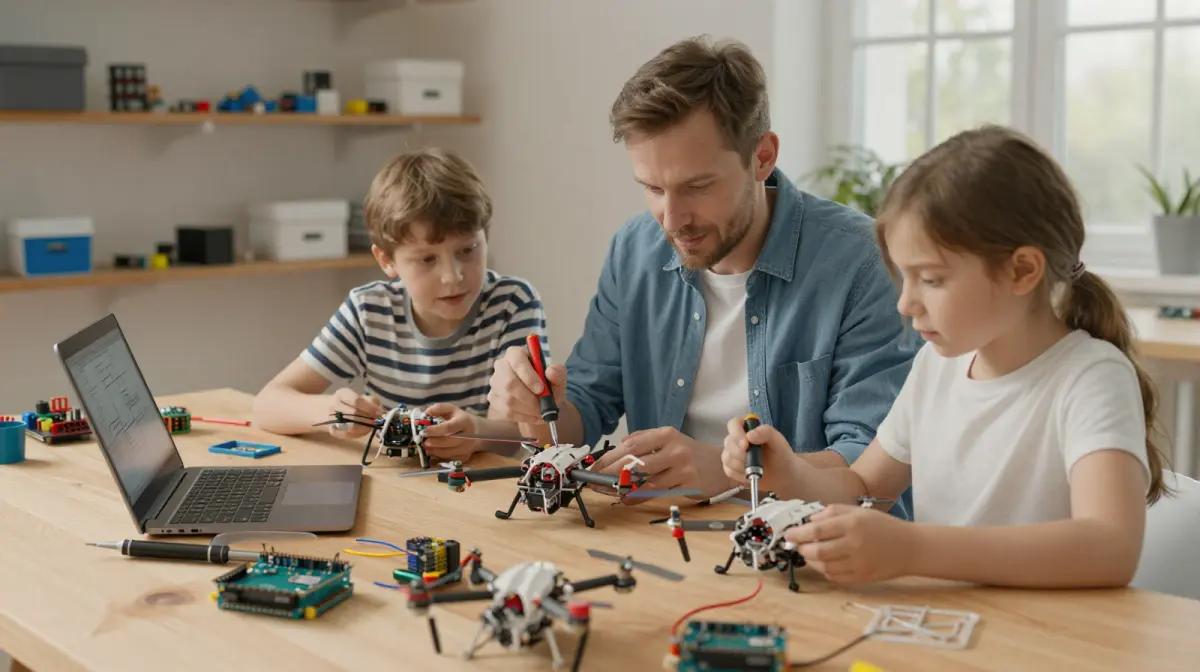
Picture a Friday evening. You close your laptop. Code is still buzzing in your head. But instead of mindlessly watching a series or endlessly scrolling through social media, you pull out a box of components and tools.
Inside — not just parts. Inside — a challenge. Your brain needs to assemble four motors, a controller, a frame, connect the wires. This isn't work. This is a game you forgot how to play.
You pick up a soldering iron. You screw in the motors. Nothing works the first time. But it doesn't annoy you. It's interesting. Because your hands are doing something your brain forgot — creating something physical, real, tangible.
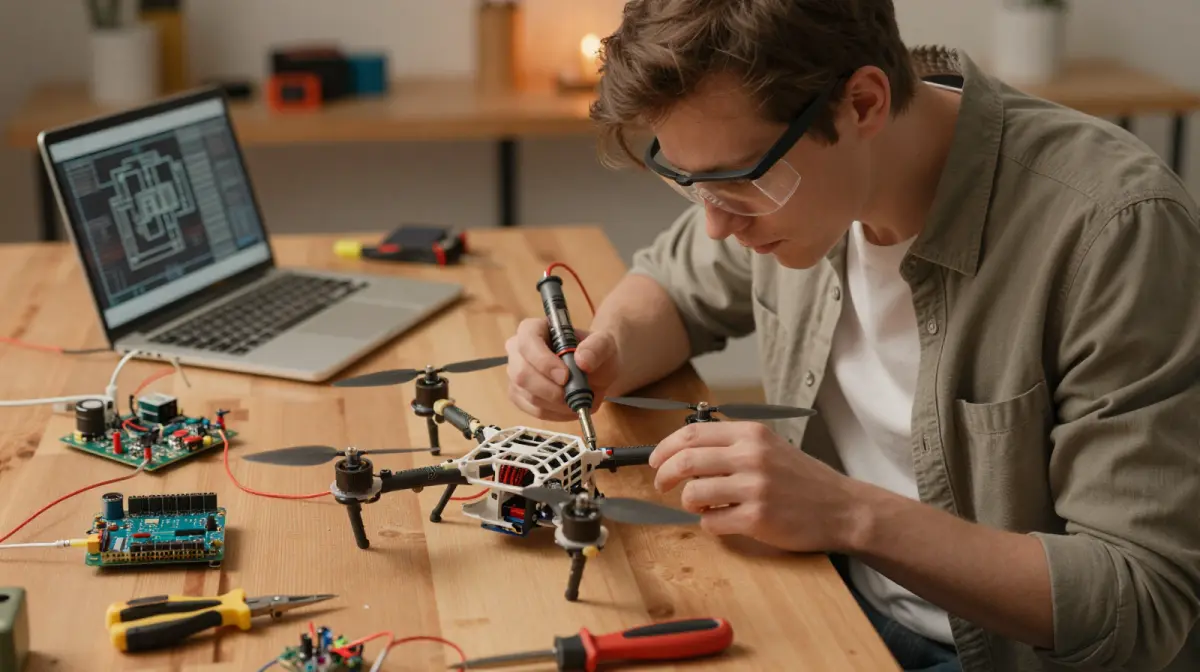
Three hours later, you look at the assembled quadcopter. It hasn't flown yet. But you built it. You, an engineer who's spent the last three years working only with abstractions, have created something you can touch. And a strange feeling appears in your chest. You can't explain it. But you remember it. It's the feeling you had as a kid when you built your first construction set. It's the feeling when you made something yourself.
And it doesn't matter that it looks crooked and clunky. What matters is the process and the result.
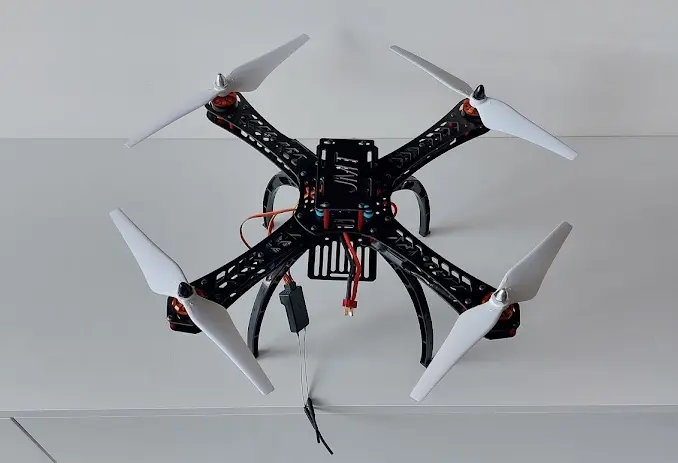
And then you connect it to your computer. And this is where the magic begins.
A Result That Takes Off
You open your favorite GCS. You enter the parameters that will make this copter take off: tuning PID controllers, calibrating sensors, loading a mission. You're looking at the 3D map in the software, watching a virtual route turn into a real flight.
And when the motors start humming and the drone lifts off the ground — you realize this isn't just a flight. This is your creation. It just flew. Literally.
You feel joy. You forgot when you last felt joy from a result.

How Does This Work?
Psychologists call this the "tangible result effect." Your brain is evolutionarily wired to feel joy from creating something physical. It's an ancient mechanism that atrophied over years of doing the same thing.
But there's something else.
You're not doing this alone. You can call your son or daughter. They look at your hands with the same curiosity you once looked at your own father's hands. You explain something to them. You show them how a propeller works. You let them hold the board. And suddenly, you're no longer just a "programmer sitting on a laptop." You're a person who can build a drone. A person who understands how things work. A person who can teach.
You didn't even notice when the conversation picked up. When you stopped being "dad with a phone" and became "dad who's building a drone."
And then you take that same drone, sit down at your computer, launch LOGOS GCS — and program a mission for it. Your son or daughter watches the map, the 3D model, the way their hands-built machine flies into the sky. It's no longer just a toy. It's a shared language. It's a connection. It's what you lost and what you got back.
A Small Step for You — A Giant Leap for Your Life
We're not suggesting you leave your profession. We're suggesting you remember why you got into IT in the first place. To create. To build. To see the result.
Building a quadcopter isn't hard. It's easier than fixing yet another microservice. Programming a flight is more interesting than a Friday stand-up.
Just do it. Read the article on how to build a drone. Download the software, check out the documentation, give it a try. Just start trying.
In the near future, you'll realize that this was the moment when your life split into "before" and "after."
Автор статьи